unsup
***Un**a’s **S**imple **Up**dater*
unsup is a somewhat minimal implementation of a generic working directory
syncer in Java. It supports running as a Java agent, to piggy-back off of the
launch of another program.
***It is particularly good at syncing small private modpacks or one-offs in small groups, where a full public distribution (e.g. on Modrinth!) is overkill or undesirable.*** It is capable of downloading mods from their original sources, wherever that may be… as long as it speaks HTTP(S).
An unsup.ini
must be placed in the working directory for unsup to know what to do, or a `-Dunsup.bootstrapUrl=` JVM argument specifying where to find such a file.
The updater works hard to ensure the working directory is never left in an
inconsistent state. Short of a sudden power loss in the middle of applying
changes (an incredibly short time window), an unsup update cannot result in
an inconsistent or corrupted working directory.
It does hash-based consistency validation (with your choice of function, SHA-256 recommended) on all downloads and on files before overwriting
them, warning the user if they’ve changed something that has been updated. It
additionally supports signing manifests using OpenBSD Signify for additional
security.
unsup’s unique simplified design means it is compatible with **all launchers**,
from the vanilla launcher to MultiMC. Just add `-javaagent:unsup.jar` to the
JVM arguments, and place `unsup.jar` and `unsup.ini` in the .minecraft
directory.
In Prism Launcher, you can utilize unsup as a “component” by importing the
`com.unascribed.unsup.json` from the latest release on Forgejo. (I can’t upload JSON files to Modrinth). This will allow Prism
Launcher to download and manage unsup. (MultiMC does not support Java agent
components, despite requests.)
It also has a built-in concept of *environments* and *flavors*, allowing it to
be used to manage server installs rather than just clients, and allowing users
to pick between multiple mutually incompatible mod sets with a feature-packed interface unlike any other updater tool.
unsup is also capable of updating MultiMC’s “components”, including
unsup itself if it is added as one. This means you can update mod loaders or
Minecraft itself.
## Creating Packs
You can either point unsup at a Packwiz pack.toml (recommended),
or write a native unsup manifest by hand. See the wiki for info on the
native manifest format. The Creator GUI is on hold, as Packwiz has become a
de-facto standard for Minecraft modpacks.
## Stability
unsup has been used for modpacks on versions from b1.7.3 to 1.21.5, both client and server,
and is known to work with Forge (both legacy and modern), Fabric, Quilt, and NeoForge. It
has successfully powered many modpacks, from small
to large. Native manifest and Packwiz manifest
support are both quite stable, and have been used extensively.
Signing support is still somewhat experimental, and has not been deployed by anyone at
large scale. That someone could be you — please let me know if it works well!
## GUI
unsup has a minimal and elegant GUI that works everywhere (yes, including
macOS) and can have all of its colors customized to make it fit in with your
branding. It ships with a dark theme with minty accents. Check out the gallery tab!
## License
unsup is released under the LGPLv3.
Unstable Death Sound
Plays the wither spawn sound when someone dies like Unstable SMP
**⚠️ I have not tested this resource pack on any version below 26.1**
This may not work on some servers
Here are some that it doesn’t work on (you can report more on the github):
– mcpvp.club
UnSignedVelocity2
# UnSignedVelocity2




Allow your moderation plugins to work again for users with versions 1.19.1 or higher
This plugin works by removing signed information from commands and messages sent by clients 1.19.1 or higher, allowing plugins that cancel proxy messages, such as ChatRegulator or AuthMeVelocity, to work again
This is a fork of the original UnSignedVelocity made by 4drian3d, updated to work with newer Minecraft versions
## Requirements
– Velocity 3.4.0+
– Java 17+
– PacketEvents 2.4.0+
## Metrics

Unreal Portal Engine
U.P.E. aka Unreal Portal Engine – is a resource engine designed to visually improve the portal(s) in Minecraft Java Edition.
Do you remember the colored portals from the 20w14infinite snapshot and jeb_ the sheep? I created resource packs using CIT (Custom Item Textures), in which I implemented the ability to paint portals using renamed leather armor and dye, and to apply absolutely any image to them.
Resource packs? Why not a resource pack? During development, I encountered difficulties due to the final resource pack size, model limitations in Minecraft, and name length limitations in older versions and in the OS itself. Therefore, I had to split the resource packs into separate components.
Core Engine (for all game versions)
Add-ons (for Optifine versions from 1.9 to 1.21.4 and for versions starting from 1.21.5 and all future versions, including snapshots)
Connector (for add-ons for game versions 1.21.5 and all future versions, including snapshots)
The core engine doesn’t do anything on its own. It’s just a collection of models. So, enabling it in-game won’t change anything.
Addons work alongside the engine. With them, you can paint portals or use any PNG image (or GIF after proper conversion). Or you can use any image and color it with a dye. It’s all up to your imagination.
Connector was created due to the priority of resource packs in the list. It’s needed to allow addons to work together on versions 1.21.5+.
Where is a resource pack useful? In singleplayer and on servers.
Since these are resource packs with item renaming, all visual changes will be visible to everyone who has them installed.
You can color-code portals to help you remember which one leads where or which one is connected to which.
You can create a portal gallery.
It’s all up to your imagination.
FAQ
Question 1: what does the engine do?
Answer: adds a set of .json models that, after renaming an item, can do the following:
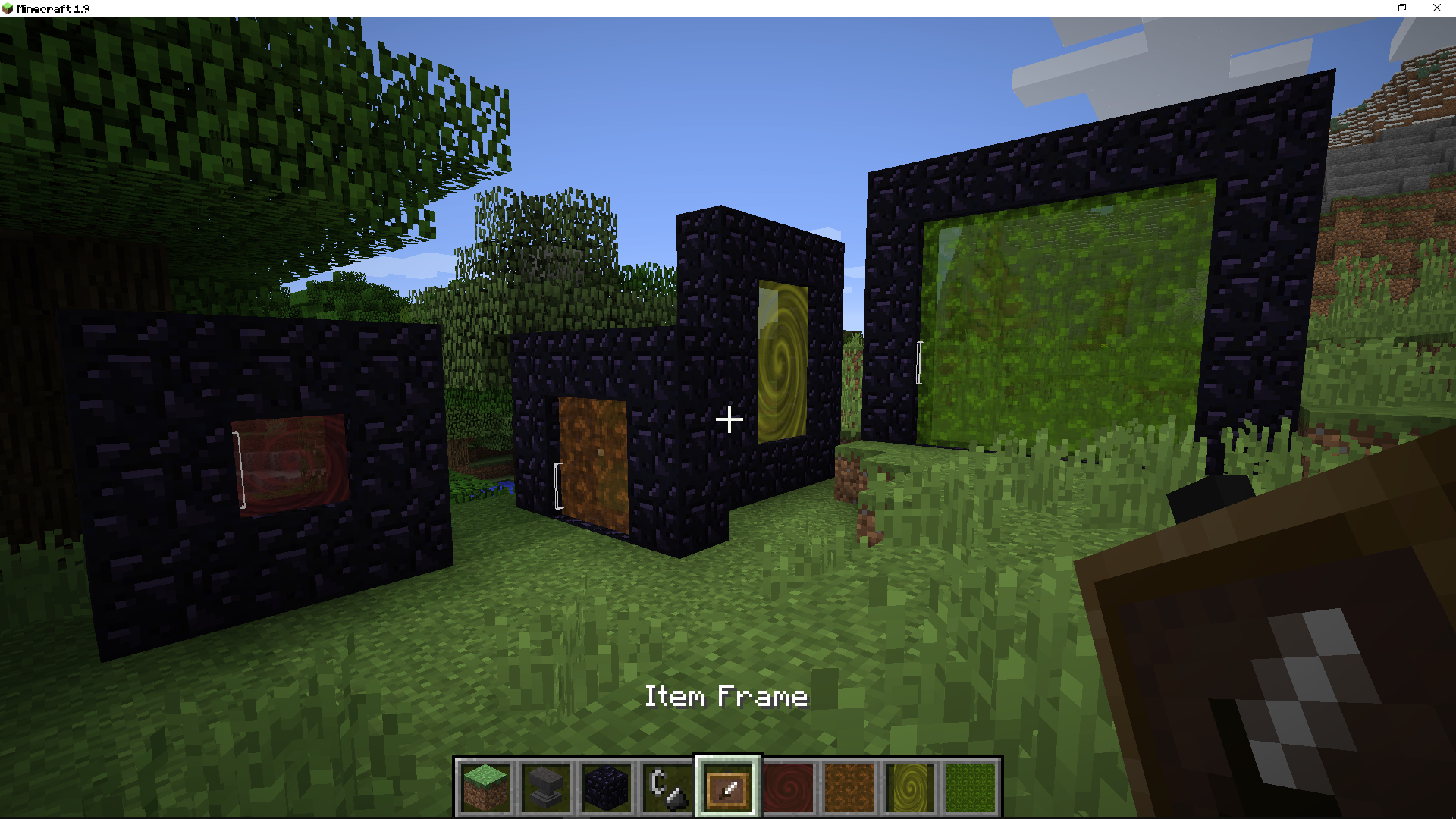
But if you just enable the resource pack, nothing will change in the game, since it is just a set of models.
Question 2: what is needed for the engine to work?
Answer: you need to create an addon for it using CIT (Custom Item Textures) technology, which is available in Optifine, in third-party mods like CIT Resewn, and starting with 1.21.5+, in the vanilla game.
Question 3: will addons work on the server too?
Answer: yes, because CIT (Custom Item Textures) is used exclusively on the game client and not on the server.
Question 4: how to create your own addon?
Answer: you need knowledge of resource packs, scripts for mass file renaming, and Notepad++ for mass character changes.
Question 5: what do you mean by mass renaming?
Answer: portal sizes. This engine supports all portal sizes, from the impossible 1×1 to the maximum 21×21.
Unrandom Textures
Minecraft version 1.8 added the “Alternate Blocks” setting which, when toggled on, gave certain blocks a random orientation. Minecraft 1.9 removed the option, making certain blocks always have a random orientation.
Thanks to resource packs, the previous non-random state for those blocks can be restored. Because this doesn’t touch the textures directly, this is compatible with any resource pack that doesn’t modify the block states.
If you’re playing on a server and take screenshots, but have people decode the random block rotations to find and grief your build, this pack will hinder their ability to find your build. *Note: this won’t prevent users from decoding based on blocks this pack does NOT unrandomize (such as Lily Pads) nor natural features in the screenshot (such as where flowers spawn).*
Pack version numbers coincide with format numbers for ease of tracking. Snapshots are *not* directly supported (in some cases, version numbers will skip to keep in line with format numbers). In most cases, you can use an existing pack with a different version. In my experience, Minecraft tends to deselect your resource packs that are out of date, but there are rarely changes that break using an older version with whichever version you are playing. Check the changelog for (known) breaking changes.
The blocks this pack affects are:
– bedrock
– black concrete powder
– blue concrete powder
– brown concrete powder
– cyan concrete powder
– deepslate
– dirt
– dirt path
– grass block
– gray concrete powder
– green concrete powder
– infested deepslate
– infested stone
– light blue concrete powder
– light gray concrete powder
– lime concrete powder
– magenta concrete powder
– mycelium
– netherrack
– orange concrete powder
– pink concrete powder
– podzol
– purple concrete powder
– red concrete powder
– red sand
– rooted dirt
– sand
– sculk
– stone
– white concrete powder
– yellow concrete powder
If you find an error in the pack, hop on my Discord and let me know about it.
If you see a block I missed, hop on my Discord and let me know about it.
(Discord link in sidebar)
Devin’s Unobtrusive Grass
This pack shortens grass, ferns and more to make them less obtrusive.
*Works well with GrassKiss*
## 📥 Installation guide
Simply download the zip file and drop it into your `.minecraft/resourcepacks` folder. After that, enable it in your resource packs menu. If you are using other resource packs, you may need to move this one to the top for the textures to be applied.
## 🔧 Modified blocks
– Grass
– Tall grass
– Rose bush
– Fern
– Large fern
Unobtrusive Armor
Removes parts of the armor textures so you can see your friends’ skins! (If you have any…)
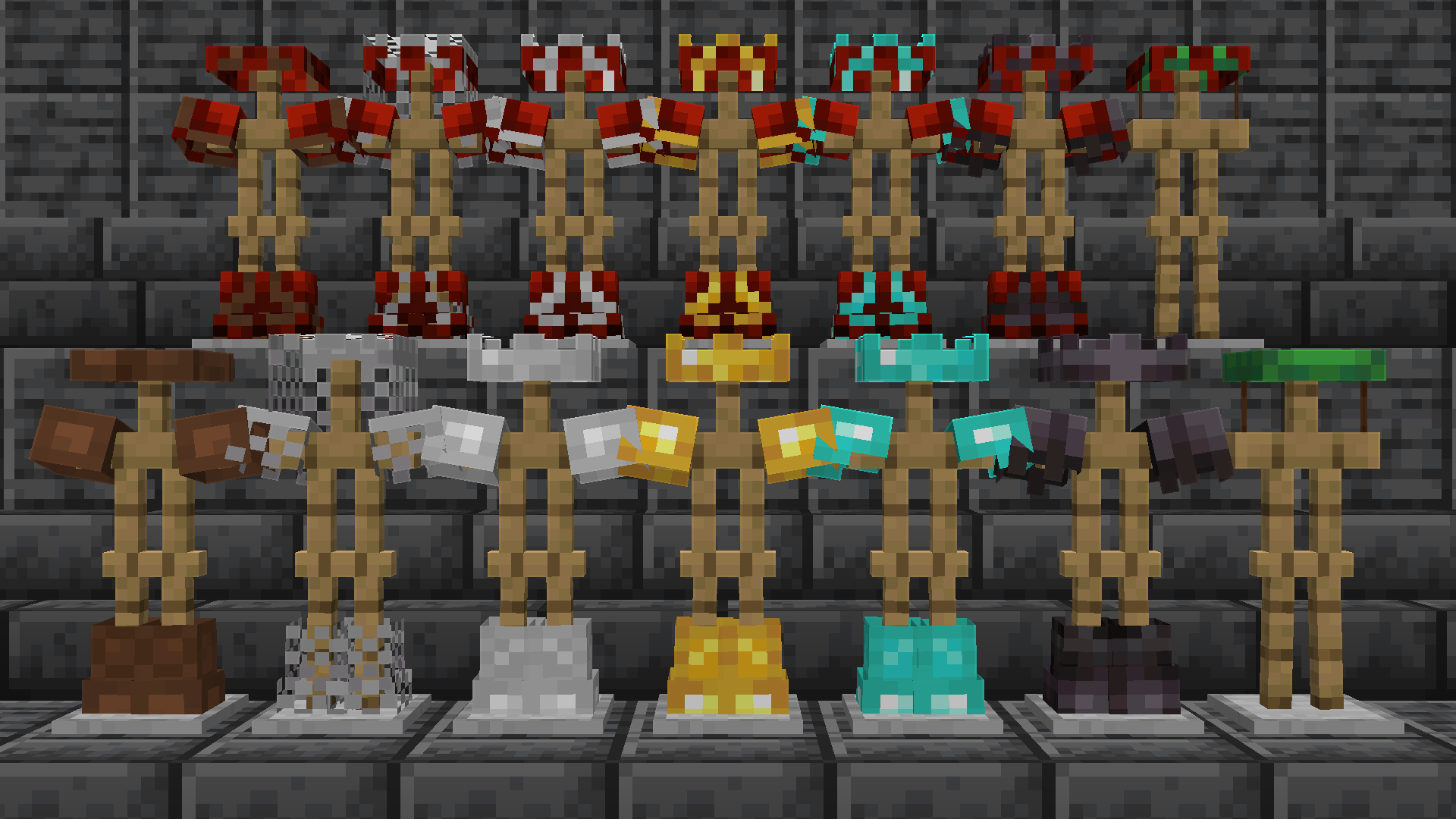
*Note: copper armor is also included as of v3.0, I’m just too lazy to retake this picture.*
Inspired from the **Limited Life Series** by **Grian**
Unobstructive Armor
# Unobstructive Armor
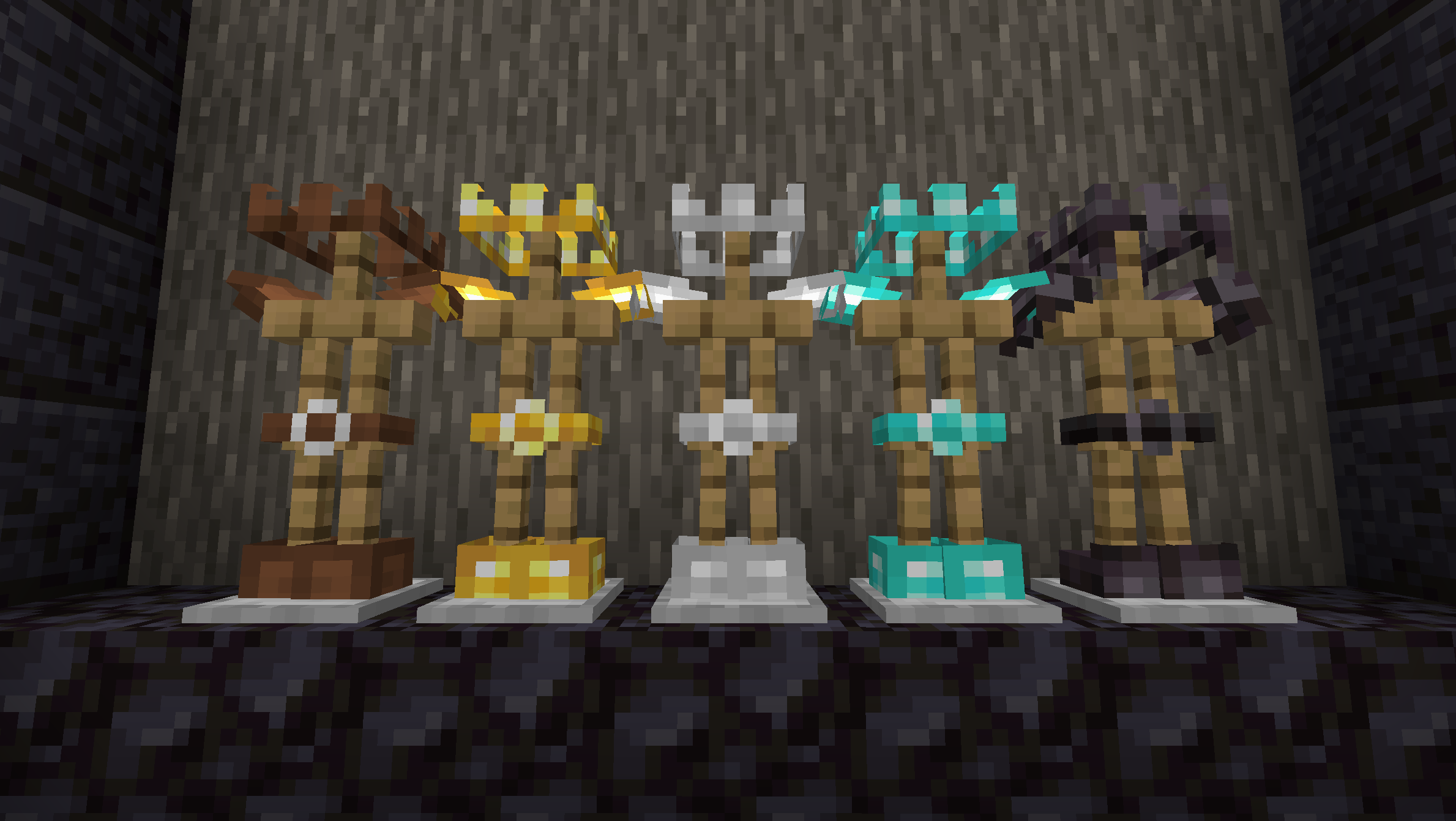
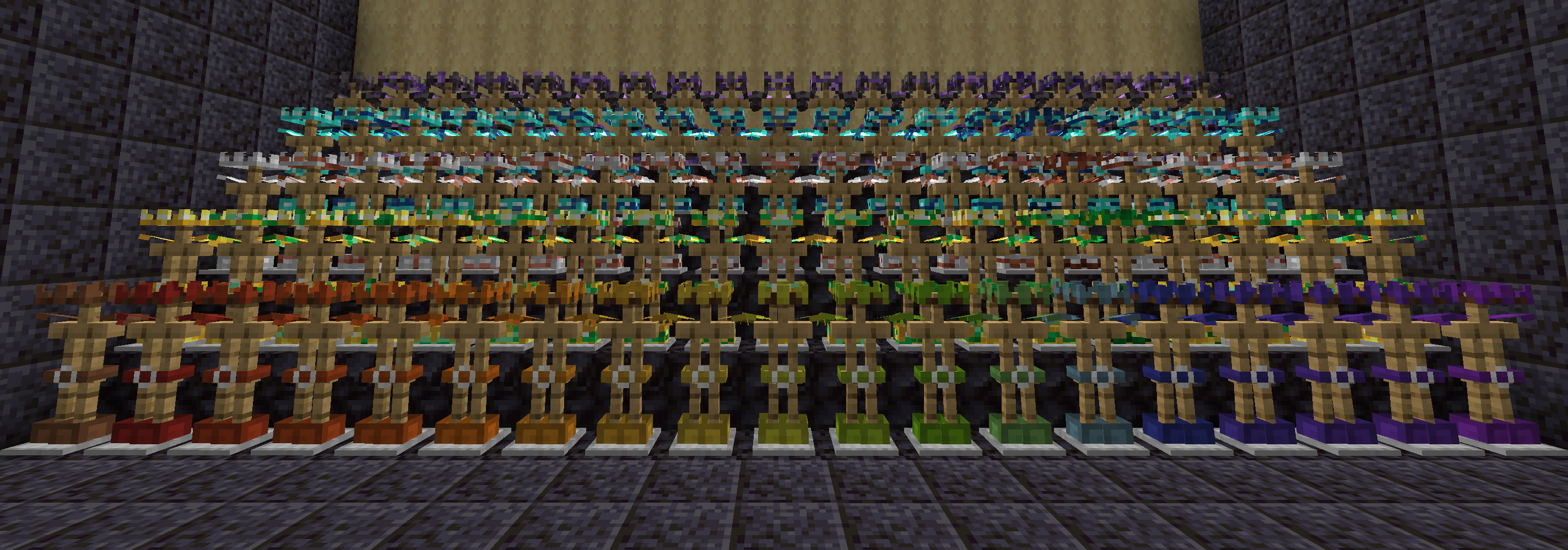
Unobstructive Armor retextures helmets, chestplates, leggings, and boots into crowns, shoulder pads, belts, and shorter boots so that less of players’ skins are hidden by armor while still keeping worn armor identifiable.
### Armor types
Leather, gold, iron, diamond, and netherite armor have been retextured with the new shapes.
### Armor trims
Every armor trim has been tweaked to fit with the retextured armor shapes.
### Helmet items
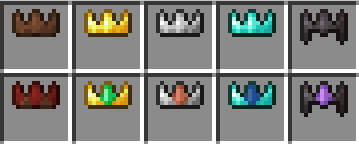
The helmet items are retextured to represent their crown presentation instead. The other armor pieces haven’t been retextured because I found that they weren’t as easily recognisable as armor in the inventory.
### Visible player skins
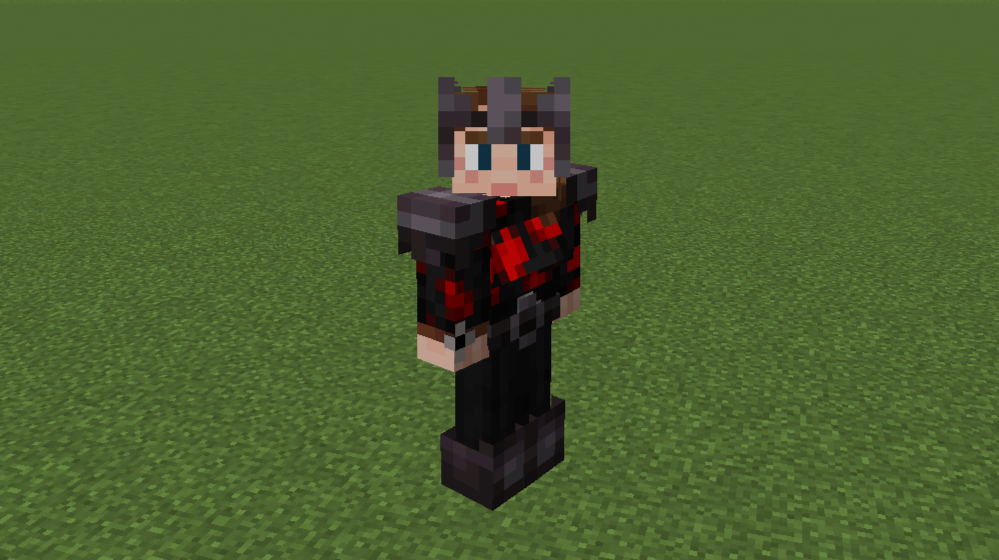
The majority of each player’s skin is visible while wearing full armor.
**Note:** My skin used in the screenshots and resource pack icon uses Ears to modify the chest. This resource pack only changes armor textures – it makes no modifications to player models or skins.
### Similar packs
After creating this resource pack I discovered that another exists with a similar concept and name: Unobtrusive Armor. While I came to the same idea indepdenently, I want to acknowledge that I was not the first to implement this idea. Feel free to check out Unobtrusive Armor and see which resource pack you prefer.
UNO TOTEM
This ResoucePack is the result of minutes of Modeling, and is made possible thanks to players like you. If you would like to show a token of your appreciation for my work, and help support the development of This ResourcePack in the process, Then follow me
This ResourcePack changes the Totem of undying from the boring texture into an UNO Card.
UNO Reverse Card Totem
In This Pack The Totem Of Undying Texture Is replace by Uno Reverse Card Texture.